State officers spend a year speaking to strangers, running meetings, and representing thousands of members. Here is what that year actually teaches — and why employers notice it.
Every year, a small group of South Dakota career and technical education students runs for state office in SkillsUSA. They campaign, interview, deliver speeches, and — if elected — spend a year representing thousands of members across the state. They open general sessions in front of large audiences, meet with industry partners and elected officials, train chapter officers, and run an organization's public face while carrying a full course load and, frequently, a job.
Ask any of them about it a year later and you get a version of the same answer: it was harder than expected and it changed how they operate. This article is about what specifically changes, because the mechanism is worth understanding — for students considering running, for advisors deciding whether to encourage a candidate, and for employers trying to read what a state officer line on a résumé actually signals.
Lesson one: you can speak in front of people, and the fear does not go away — it gets manageable
Most incoming officers are not natural public speakers. A significant number are technical students who chose their field partly because it involved doing rather than presenting. Then they are handed a microphone in front of a full auditorium.
What they learn is not that fear disappears. It is that fear is survivable and that performance is a function of preparation, not confidence. Officers develop a workable process: know the first thirty seconds cold, know the structure of the middle, know the last line. Speak slower than feels natural. Look at three people in three parts of the room. Recover from a stumble by continuing rather than apologizing.
This is a career skill with an absurdly high return. Every safety meeting a foreman runs, every estimate a contractor presents, every customer explanation a technician gives, and every interview any of them will ever have depends on it. Most professionals learn it in their thirties, badly, under pressure. State officers learn it at seventeen with coaching.
Lesson two: how to run a meeting that respects people's time
Officers learn parliamentary procedure, agendas, minutes, motions, and the underlying purpose of all of it — making sure a group can decide something fairly without one loud person dominating. That structure looks bureaucratic until you have sat through a meeting without it.
The transferable version is simple and rare: start on time, publish an agenda, state the decision to be made, invite dissent explicitly, decide, assign the follow-up to a named person with a date, and end early. An employee who can do that in their first year on a crew becomes the person put in charge of things. Most adults never learn it.
Lesson three: representing an organization is different from representing yourself
This is the lesson officers describe as the biggest adjustment. In an officer blazer, everything you do reflects on thousands of members and on every advisor who vouched for you. Your social media is public. Your conduct at a restaurant with a partner employer is observed. Your handshake and eye contact with a sponsor becomes that sponsor's impression of the entire organization.
That responsibility produces a specific kind of maturity — the recognition that professional identity is something you carry rather than something you switch on. It maps precisely to employment. A technician in a company truck is the company. A nurse in scrubs at the grocery store is the hospital. Students who internalize this at eighteen skip a category of early-career mistakes.
Officers stop asking 'what do I want to do right now' and start asking 'what does this represent.'
Lesson four: how to talk to adults who are not your teachers
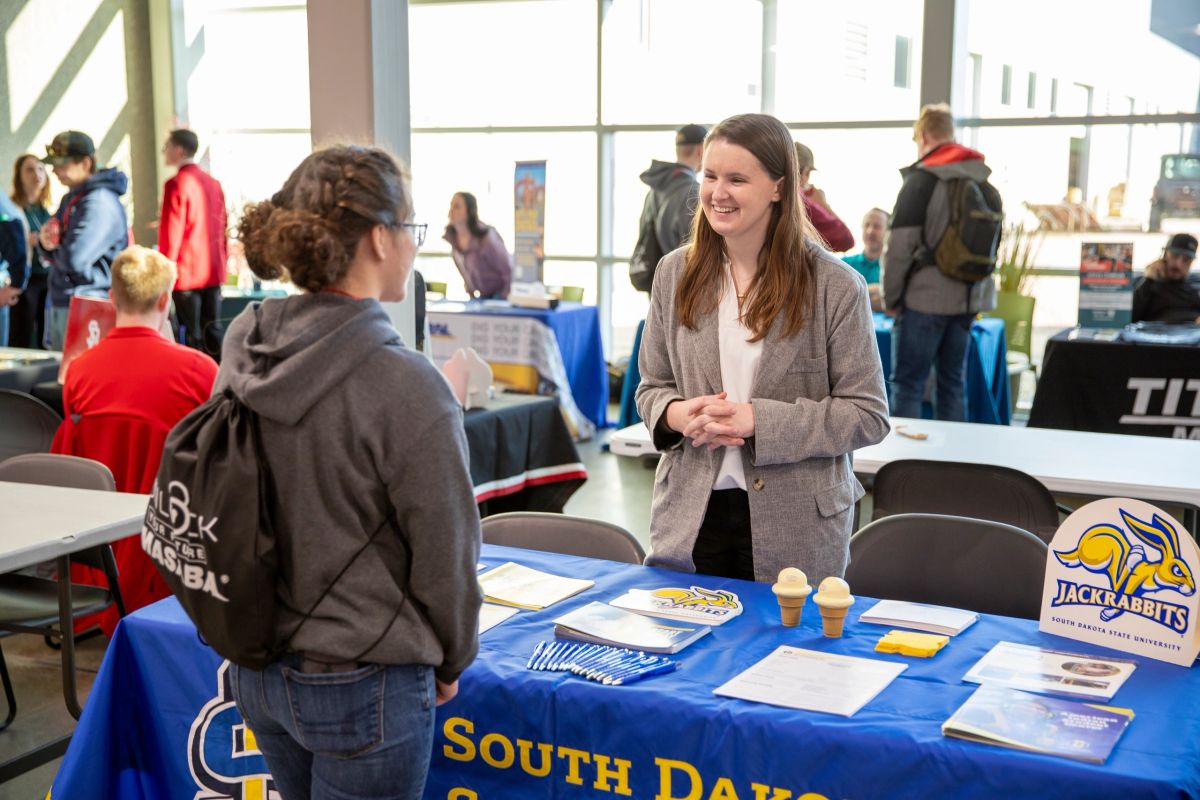
Officers meet business owners, plant managers, association directors, legislators, and school administrators. These conversations follow rules nobody explicitly teaches high schoolers: introduce yourself clearly, offer context for who you are, ask a question that shows you did some homework, listen more than you talk, thank people specifically, and follow up.
A year of this produces a student who can walk into a career fair, a job interview, or a supplier meeting without freezing. Advisors regularly report that the change is visible within a few months — students who mumbled in September are running a sponsor conversation by February.
Lesson five: planning under real constraints
Officer teams plan and execute actual events — conference sessions, officer training, service initiatives, and outreach. That means budgets, timelines, dependencies on other people, and consequences when someone drops a task. It is project management with the training wheels partly off.
The specific competencies built:
- Working backward from a fixed date to build a schedule.
- Estimating how long things take, and revising when the estimate proves wrong.
- Delegating without abandoning, and following up without nagging.
- Communicating status before someone has to ask for it.
- Making a decision with incomplete information because the deadline is not negotiable.
Those bullets are also an accurate description of a project foreman's job. The scale differs; the skill does not.
Lesson six: leading peers is harder than leading strangers
An officer has no authority over the members they lead. They cannot assign grades or issue discipline. Everything they accomplish runs on credibility and persuasion. That is the hardest leadership environment there is, and it is excellent training, because most workplace leadership is the same — influence over people who do not report to you.
Officers learn that credibility comes from doing the work visibly, keeping commitments, and giving credit away. They also learn the uncomfortable half of leadership: holding a peer accountable without damaging the relationship, and being held accountable themselves by a teammate.
Lesson seven: how to lose
Not everyone who runs is elected. More candidates lose than win, and the ones who handle it well often gain more than the winners. Losing an election in front of your peers, then choosing to stay engaged, run for a chapter office, and try again the next year is a serious act of maturity — and a much stronger indicator of character than a title.
Advisors should say this out loud to candidates before the vote. The experience of preparing a campaign, writing a speech, and interviewing with a screening committee is valuable regardless of the outcome, and framing it that way in advance keeps a loss from ending a student's involvement.
What employers should read into it
When a state officer line appears on a résumé, it is worth asking about in an interview, because it typically indicates several things at once:
- The student competed for a position through campaigning and interviews, and was selected by peers and adults.
- They have spoken in front of large groups and to industry professionals.
- They managed a substantial time commitment alongside coursework and often employment.
- They have operated under an explicit conduct standard for a full year.
- They have planned and delivered events with deadlines and budgets.
In practical terms: this is a candidate who is unlikely to be rattled by a customer conversation, capable of running a toolbox talk, and comfortable being visible. Those traits are why so many former officers move into supervision early.
For students thinking about running
A few honest points before you decide.
- The time commitment is real. Conferences, travel, training, and preparation add up across the year. Talk to your family, employer, and coaches before committing.
- You do not need to already be a polished speaker. Most officers were not. You need to be willing to be bad at it in front of people while you improve.
- Your technical program is not a disadvantage. Officers from welding, health science, culinary, and IT programs all bring credibility that a purely academic candidate does not have.
- Start at the chapter level. Chapter office is the training ground and the credibility base for a state campaign.
- Attend Fall FOCUS. It is where you will meet current officers, get honest answers, and see the role up close before deciding.
For advisors
The students who most need this experience are rarely the ones who volunteer. Look for the quiet, capable student who is respected in the shop but has never been asked to speak. Tell them directly that you think they should run, and offer to help them prepare. That single conversation has changed a large number of South Dakota careers.
Then support the run properly: help with the speech, run mock interviews, get another teacher to critique the delivery, and prepare the student for both outcomes. Whether or not they win, they finish the process a different candidate for everything that comes next.
Leadership in career and technical education is not a departure from technical training. It is what turns a skilled worker into someone who runs the crew, the shop, or eventually the company.
Get involved with South Dakota SkillsUSA
Students, advisors, and industry partners across South Dakota build the state's skilled workforce together. Start a chapter, sponsor a contest, or bring your students to the state conference in Watertown.